Cold meze. Aegean and Istanbul.
Haydari
Strained yogurt, thick enough to hold a spoon upright, with garlic, dill and dried mint, finished with olive oil. It is on almost every first round of plates.

Long before the bar, there was the table.
An open encyclopedia of the meyhane: its rakı, its meze, its songs and its unwritten rules.


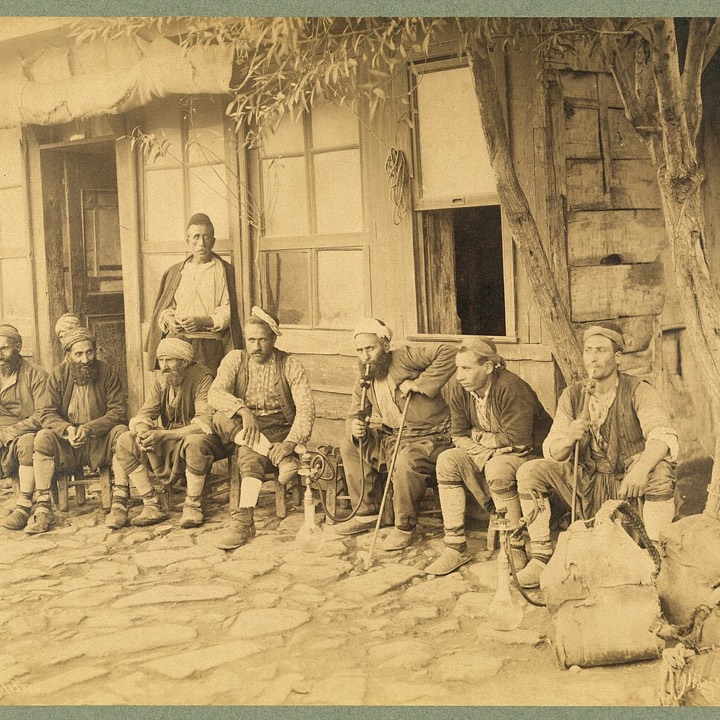
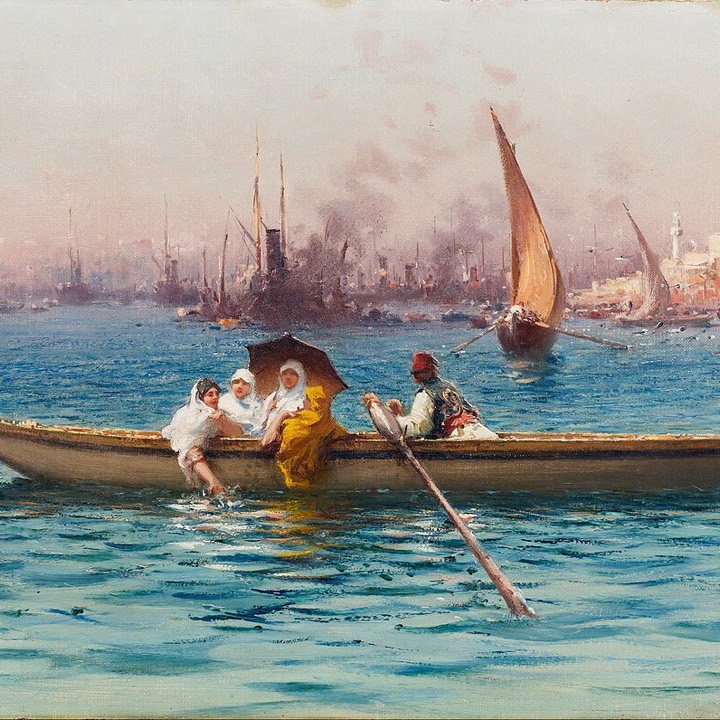
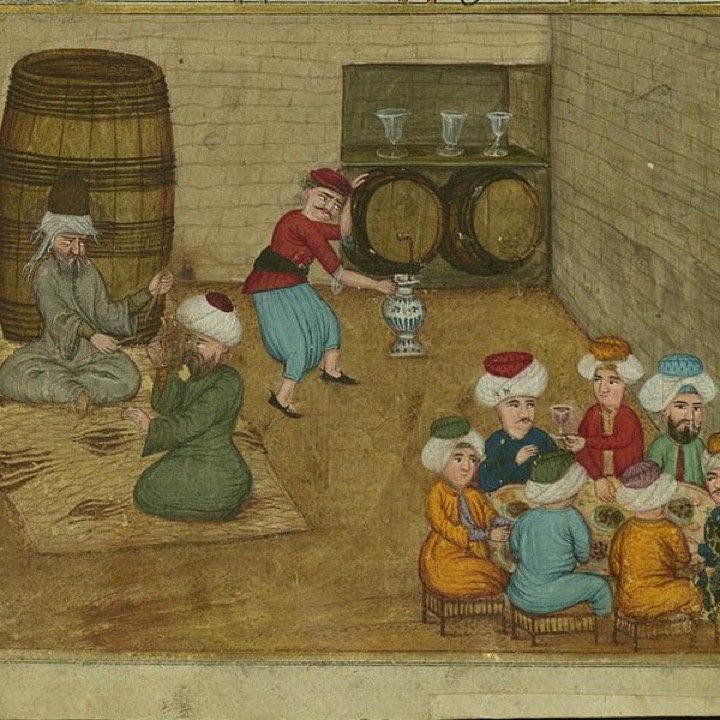
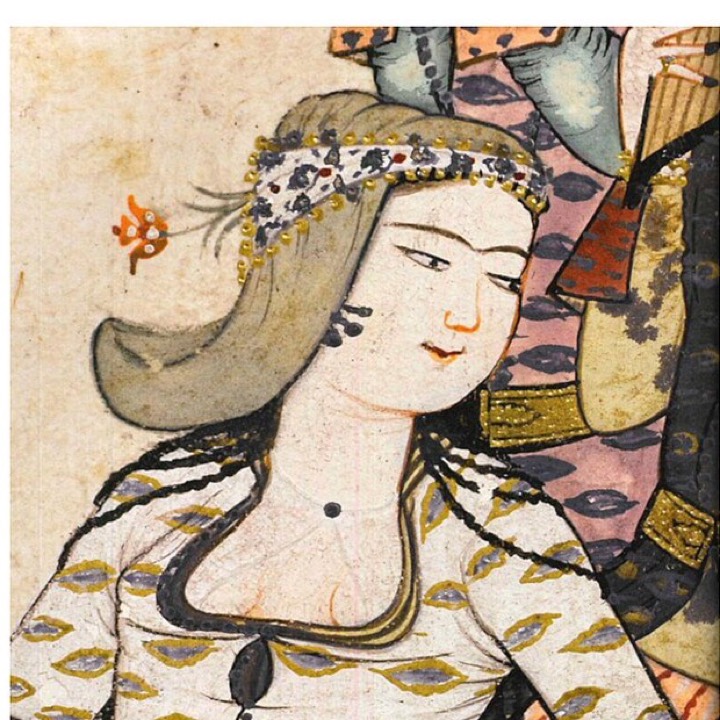
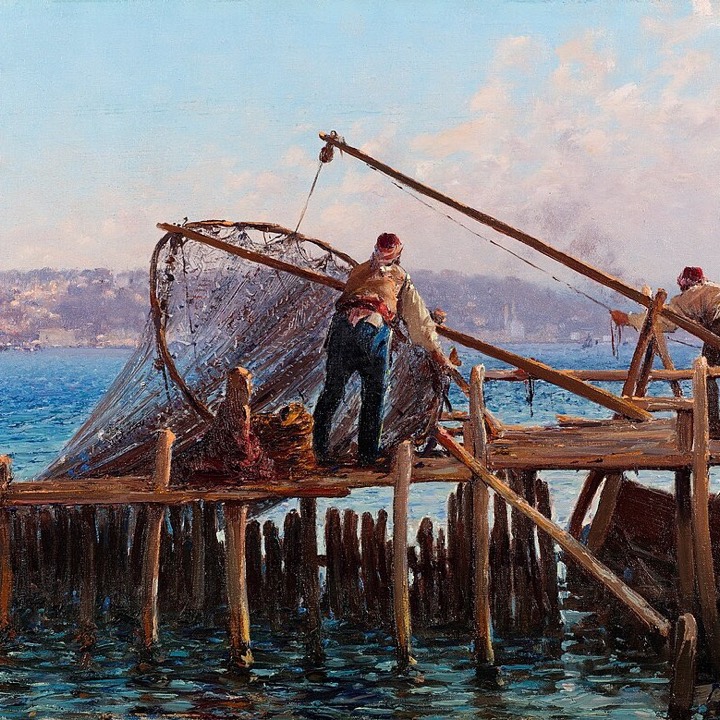
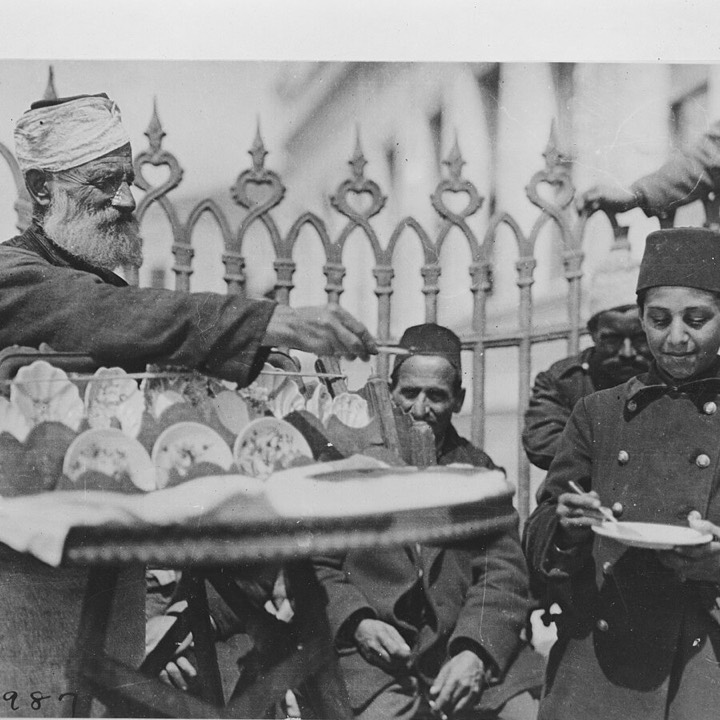
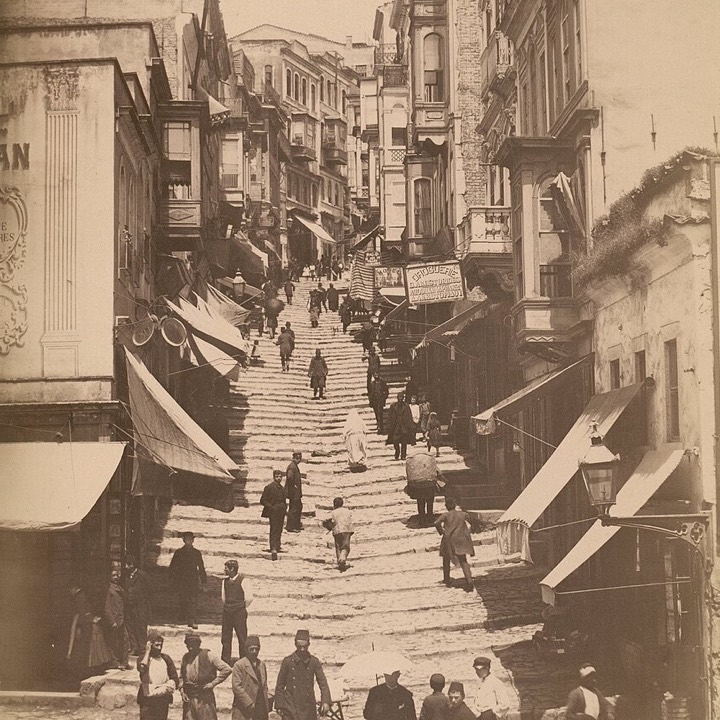
Istanbul, 1720 to 1920. Sébah & Joaillier, Fausto Zonaro, Atayi (Walters Art Museum), Levni, J. G. Mann, Library of Congress, Guillaume Berggren. Public domain.
meyhane
/mey·ha·NEH/ noun, Turkish. From Persian mey, wine, and hâne, house.
In Turkish we say muhabbet. English has no clean word for it. Conversation is too thin, communion too holy. It is the talk that warms as the night goes on, and the reason a single bottle can last four hours.
The meyhane exists to protect it. The food comes in small plates so nobody has to stop talking. The rakı is cut with water so nobody has to stop drinking too early. The musicians play what the table asks for. Everything is arranged around the people sitting down.
This site is a record of how that table works: what goes on it, in what order, to which songs, and under which rules nobody ever writes down. We are writing them down.
Fig. 1. A meyhane table for four, seen from above. Every object on it leads to a part of this encyclopedia, the same places as the menu at the top.
Rakıglass, water, carafe, ice
Meze Atlasevery plate on the table
MusicZeki Müren's Ayrılık, on a napkin
Adabthe unwritten rules, and the bill
Askthe meyhaneci's chair
Glossaryroka, and every other word
Legendstables that became songs
Once at the start, and again when someone new sits down.
Pour two fingers into a tall, narrow glass. Neat rakı is clear. A tek is a single, a duble a double.
Add cold water. The anise turns it white. This is why it is called aslan sütü, lion's milk.
Ice goes in last, if at all. Ice dropped into neat rakı leaves a film of anise oil on top.
Keep a glass of plain water beside it, and sip from both.
Eat. Rakı without meze is a mistake the table will not let you make.
The eastern Mediterranean shares a family of spirits that look alike in the bottle. They are not the same drink.
| Spirit | Where | Made from | Anise | With water |
|---|---|---|---|---|
| Rakı | Türkiye | Grape distillate (suma), redistilled with aniseed | Yes | Turns white |
| Ouzo | Greece | Usually neutral spirit with some grape distillate | Yes | Turns white |
| Arak | Levant | Grape spirit with aniseed | Yes | Turns white |
| Tsipouro | Greece | Grape pomace | Sometimes | Depends |
| Pastis | France | Neutral spirit with anise and liquorice | Yes | Turns yellow-white |
| Rakija | Balkans | Fruit brandy: plum, grape, quince | Usually no | Stays clear |
Cold meze. Aegean and Istanbul.
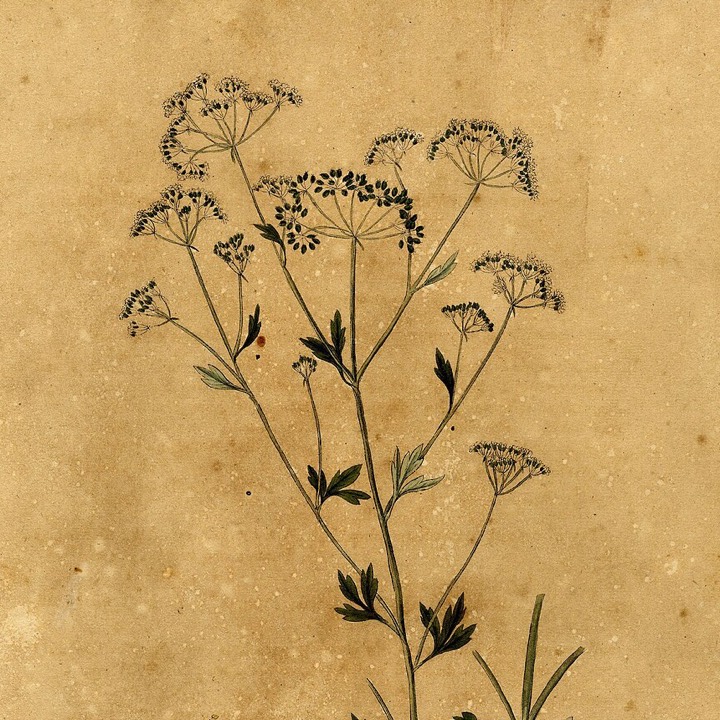
Strained yogurt, thick enough to hold a spoon upright, with garlic, dill and dried mint, finished with olive oil. It is on almost every first round of plates.
Tomato, pepper, onion and parsley chopped to a paste, sharpened with pomegranate molasses.
Fava/FA·va/Dried broad beans cooked down to a purée, set with olive oil, served with dill and red onion.
Beyaz peynir & kavun/bay·AZ pay·NEER/White cheese and cold melon. The opening plate on most rakı tables.
Topik/to·PEEK/An Armenian meze of Istanbul: chickpea and potato wrapped around slow-cooked onion, tahini and cinnamon.
Lakerda/la·KER·da/Bonito cured in salt, sliced thick, served with red onion.
52 classic meze, each with its recipe and the drink it goes with.
A meyhane evening has a shape, and the music follows it. Five listening lists, one for each stage of the night, from the first slow fasıl to the songs nobody should sing sober.
Nobody shouts at a meyhane band. You write the song on a napkin and the waiter carries it over. Write yours and send it, and the band starts to play.
Üsküdar'a gider ikenSong stories. One tune, a dozen countries, and every one of them sure it is theirs.
Every meyhane band knows it, and most tables are singing by the second line. The same melody turns up in a Romanian songbook from the 1850s, in Ottoman and Serbian recordings from the early 1900s, in a 1924 klezmer record made in New York and, in 1953, in Eartha Kitt's Uska Dara.
In 2003 the Bulgarian director Adela Peeva followed the tune across the Balkans for her documentary Whose Is This Song? In each country people told her it was a local song. In several, the suggestion that it belonged to a neighbour started an argument.
One popular story says it came from the bagpipes of Scottish soldiers during the Crimean War. The recordings and the songbook are older than that story allows. At a meyhane table the question never mattered much. Whoever knows the words sings.
Manners, but older and warmer than the English word. Nobody hands you the rules of a meyhane table. You learn them by sitting at one with people who already know.
Aydın Boysan, architect, writer and the most quoted man ever to sit at a rakı table, drank with the same friends for most of a century. He said the greatest meze is muhabbet. These are his manners, and the ones the city has put in his mouth since.
Nº 00147ADİSYON FİŞİMASA 7
| CİNSİitem | MİKTARIqty | FİATprice | TUTARItotal |
|---|---|---|---|
| Never drink rakı aloneBoysan said he had not, once, in seventy years. | 2+ | ||
| Say two or three sentences, then let someone else talk | 2-3 | ||
| Nobody shows off. Sit down as you are | 0 | ||
| Begin after sunset. Small sips, never a double in one go | tek | ||
| One şerefe, at the start. Again only when someone new sits down | 1 | ||
| The youngest at the table pours | 1 | ||
| Leave money and work at the door | 0 | ||
Rules 1 to 3 from Aydın Boysan's own interviews. Rules 4 to 7 as widely attributed to him.
Forty years behind the same counter, and he has heard every question twice. Love, money, friends who never pay, which meze comes first. Ask in any language; he answers in yours, with a line from the poets if one fits.
Aşk kadın ruhundan hiç mi anlamaz?
Evlat, anlasaydı bu kadar şarkı yazılır mıydı? Sezen Hanım bir ömür bunu sordu, cevabı bulamadı ama bize ne şarkılar kaldı. Âşık Veysel hayatı uzun ince bir yola benzetir; o yolda anlamaya çalışan yorulur, yanında yürüyen varır. Sen anlamaya uğraşma, dinle. Bir haydari getireyim mi?
The words of the meyhane, of rakı, wine and beer, of the songs and of the long night, with how to say them. Over a hundred and fifty words, and counting.
The bright, easy state one glass short of drunk. The point to stay at.
Meyhanes that made it into songs, poems, films and memory. Some still pour, some closed long ago, one never existed at all. Every story here comes with its sources.
1876
Çiçek Pasajı, Istanbul
The Cité de Péra arcade was completed in 1876 and took the name Çiçek Pasajı from flower sellers, later filling with meyhanes. Cavit Güneş, nicknamed Entelektüel by Doğan Nadi in 1952 while a waiter, ran the Huzur meyhane there from 1969 and called his customers Ekselans. Bayram Aydındoğan opened Neşe in the nearby Krepen Pasajı in 1965 and moved to Çiçek Pasajı as Seviç after Krepen was demolished, with regulars including Yaşar Kemal, Can Yücel, Rıfat Ilgaz and Aydın Boysan. The accordionist Madam Anahit (Anahit Yulanda Varan, died 2003) played from table to table. The building was restored and reopened as a galleria of meyhanes in 1988.
Sources: en.wikipedia.org, sabah.com.tr, flanor.substack.com, serbestiyet.com
1890
Balat, Istanbul
A Rum sea captain, Asteri Dulidis, opened the meyhane in Balat in 1890 and it passed to his son Stelyo and grandson Hristo. It was burned during the riots of 6 and 7 September 1955 and Hristo rebuilt it, and it is reported to have been used as a set for 286 Yeşilçam films, three with Türkan Şoray. Hristo moved to Thessaloniki in 1994 and the building sat idle through years of urban renewal litigation that ended in 2013. Journalist Ersin Kalkan, once Hristo's apprentice, reopened it with partners including director Ezel Akay. The popular song Agora Meyhanesi, from a poem by Onur Şenli, is about İzmir's Agora district, but listeners long linked it to the Balat house.
Sources: bianet.org, hurriyet.com.tr, timeout.com, listelist.com
1895
Yedikule, Istanbul
Safa is often described as one of Istanbul's oldest surviving meyhanes, with 1895 given as its start, when it served railway workers near the Yedikule walls. Süleyman Kızıltay, an Albanian immigrant, turned it into a proper meyhane in 1948 and his son Arif ran it after his death in 1997. Its high ceilings, bottle lined walls and shared tables have been used as a film set, including for Yavuz Turgul's Kabadayı and Av Mevsimi. The novelist Selim İleri was a devoted regular and one of his columns hangs on the wall. A music video for Deniz Seki's song Masal brought the place new attention.
Sources: hurriyet.com.tr, flanor.substack.com, bianet.org, medyascope.tv
1898
Beyoğlu, Istanbul
Pano is a wine house rather than a classic meyhane, opened in 1898 by Panayot Papadopoulos, a Rum from Samatya who sold his property to set it up and brought wine from Bozcaada and later Mürefte. After his death relatives ran it, the last keeper being an Armenian woman, Emel Hanım, until it closed in 1987. Fevzi Büyükerol bought it in 1997 to restore it and it reopened, with old regulars returning. Birgün recorded that the first customer every day was for years a dentist named Yervant who worked in the basement.
Sources: birgun.net, timeout.com
1900s
Nevizade, Istanbul
Lambo's tiny meyhane on Nevizade was a haunt of Istanbul's literary crowd in the mid twentieth century. Regulars named in the press include Orhan Veli, İlhan Berk, Leylâ Erbil, who kept a permanent chair there, Mina Urgan, Leyla Umar, Rıfat Ilgaz, Metin Eloğlu, Sadri Alışık and Can Yücel. Poems read at the table were pinned to the walls. According to Cornucopia, Lambo would accept a poem or story from customers who could not pay. A place called Lambo'nun Meyhanesi still operates on Nevizade, though in a different spot.
Sources: evrensel.net, cornucopia.net
1920s
Balık Pazarı, Istanbul
The meyhane on Sahne Sokak in the Beyoğlu fish market dates from the early years of the Republic, which gave it its name. It was a meeting place for writers and poets. The poet Ece Ayhan called it the Üç Aliler Meyhanesi because three waiters named Ali once worked there. Guides repeat that a table was kept for Atatürk. In 2009 Ercan Tekin, the later owner of Despina, named it among the historic places he was working to preserve.
Sources: timeout.com, cornucopia.net, hurriyet.com.tr
1938
Kumkapı, Istanbul
Agop İnciyan, from a family of Kumkapı fishermen, began in 1938 by selling fish soup and rakı from a boat on the shore, reportedly because drinking out was too expensive. After trying many rented shops he bought a space in an 1883 customs building in 1983, and died soon after. His son Hayko took over and, after Hayko's death, his widow Silva and grandson Daniel ran the house. Customers covered the walls with poems about the place and about rakı, and fasıl music is played in the evenings.
Sources: bianet.org, timeout.com, repository.bilkent.edu.tr
1941
Nevizade, Istanbul
İmroz was founded in 1941 in the Krepen Pasajı by Spiro Havuços and Tanaş Yalyas. Yorgo Okumuş, who had come to Istanbul from İmroz (Gökçeada) in 1935, joined in 1952 and became the face of the house until his death on 20 October 2015. When the Krepen Pasajı was demolished in 1982 the meyhane moved to Nevizade Sokak and took the name Krependeki İmroz so old customers would know it was the same place. A sign on the wall forbade singing in the meyhane. It closed after about eighty years, in autumn 2020 or 2021 depending on the source.
Sources: 100tarihilokanta.com, haberturk.com, sozcu.com.tr, bianet.org
1940s
Ulus, Ankara
Officially called Yeni Hayat Lokantası but known to everyone as Kürdün Meyhanesi, this small place on Posta Caddesi in Ulus was the meeting point of Ankara's writers in the 1940s and 1950s. Bianet names Nurullah Ataç, Orhan Veli and Cahit Sıtkı Tarancı among its regulars, and Diken adds İlhan Tarus, İlhan Berk, Mehmed Kemal and Fahir Aksoy. Journalist Altan Öymen recalled that some tables at certain hours were taken by people linked to the police or intelligence service. Fahir Aksoy wrote a memoir of the place titled Kürdün Meyhanesi.
Sources: bianet.org, diken.com.tr, kitapyurdu.com
1946
Kurtuluş, Istanbul
Despina, a Rum woman from the island of Gökçeada (Imbros), opened her meyhane in Tatavla, today's Kurtuluş, in 1946 after earlier work in a casino in Moda. She ran it for some sixty years and Hürriyet described her as an early female entrepreneur in a trade dominated by men. Shortly before her death in 2006 she handed the business to a long time employee, Ercan Tekin, who sought to register the name as a brand. She was buried in the Aya Lefter Rum Orthodox Cemetery in Kurtuluş, the meyhane's musicians played at her funeral and, by her wish, wine was poured on her grave. Her name appears in the song Yine mi Çiçek, which names her table alongside the singer Müzeyyen Senar.
Sources: hurriyet.com.tr, serbestiyet.com, oggusto.com

1954
Asmalımescit, Istanbul
Refik Arslan came to Istanbul as a teenager, worked his way up in other restaurants and opened his own meyhane in Asmalımescit in 1954. It became a gathering place for poets and writers, among them Özdemir Asaf, Refik Durbaş, Ferit Edgü and Tezer Özlü. In letters later published as Her Şeyin Sonundayım, Tezer Özlü wrote to Ferit Edgü that Refik would be her first stop in Istanbul. Arslan's nephew Yakup worked for him before founding Yakup 2. After Arslan died in 2011 the family kept it open until it closed in 2020.
Sources: en.wikipedia.org, bianet.org, hurriyet.com.tr, haberturk.com
c. 1959
Agora, İzmir
Onur Şenli wrote the poem at about 19, as a medical student, after drinking in the small kokoreç meyhanes of İzmir's Agora district. It began as a drunken letter to a girl who had stopped seeing him. Oktay Dikmen, editor of the literary magazine Neşter, titled it Agora Meyhanesi when the original title did not fit the page. Set to music by İsmet Nedim and first recorded by Gönül Yazar, it was later sung by Müzeyyen Senar, Zeki Müren, Behiye Aksoy and others. Şenli said the meyhane in the poem never existed as one place.
Sources: listelist.com, 24saatgazetesi.com, yeniasir.com.tr
1977
Asmalımescit, Istanbul
Yakup Arslan came to Istanbul from Hemşin as a boy and worked for his uncle Refik Arslan until 1977, when he opened a small meyhane called Yakup on Sofyalı Sokak. In 1982 the crowd outgrew it and he opened a larger place nearby, called Yakup 2 because the first shop kept running. Its regulars included poets Edip Cansever, Cemal Süreya, Özdemir Asaf and Turgut and Tomris Uyar, and many journalists, and the walls collected decades of cultural posters and clippings. Edip Cansever gave the owner the nickname Çağrılmayan Yakup. When Arslan died in 2013 his funeral procession left from the door of Yakup 2.
Sources: milliyet.com.tr, hurriyetdailynews.com, encyclopedia.com
1981
Rumelihisarı, Istanbul
On 26 March each year, from the late 1970s or 1981 until 1985, poets of the İkinci Yeni (Second New) circle met at the Avcılar Lokantası in old Rumelihisarı for what they called Ölmeme Günü, the Day of Not Dying. In the best known version a large rakı bottle was signed by everyone at the table and kept by the guest in lowest spirits, to be drunk together the following year. Participants included Turgut and Tomris Uyar, Edip Cansever, Can Yücel, Salim Şengil and photographer İsa Çelik. The gatherings ended after Turgut Uyar died in August 1985. The name is linked to a line by Cemal Süreya.
Sources: bianet.org, mynet.com, serbestiyet.com
2025
Urla, İzmir
Aslında Meyhane is a modern meyhane in a stone house with a courtyard terrace in Urla. In the 2025 Michelin Guide selection for Istanbul, İzmir and Muğla, announced on 5 December 2024, it was among the Bib Gourmand restaurants, which recognise good food at moderate prices. It was the only restaurant described as a meyhane among the Bib Gourmand names reported that year. Michelin describes a menu of hot and cold meze with dishes such as fish soup, kokoreç and fava.
Sources: hurriyetdailynews.com, guide.michelin.com